

Teaching a coal power plant to burn hydrogen
The Aboño power station, on the coast of Asturias, has generated electricity for half a century. With its smokestacks rising behind the city of Gijón, it is a familiar landmark in Spain’s north — vital for powering the region’s industrial operations with its 921 MW capacity. For most of its life it has run on coal, supported by gas piped in from the neighbouring ArcelorMittal steelworks. As part of the Hy2Market project, its operators — the energy company EDP and the plant’s owner, Aboño Generación Eléctrica — set out to answer a deceptively simple question: could the plant keep running, and keep using the steelworks’ gas, while leaving coal behind for good?
The answer, set out in a detailed feasibility study, is yes — but only with a careful, whole-system redesign of how the plant’s largest boiler makes heat.
From coal to a cleaner blend
The work focuses on Aboño’s Unit 2, a 565 MW boiler first commissioned in 1985. The plan is to remove its ability to burn coal entirely and replace it with a flexible mix of three fuels: natural gas for start-up and stable operation, blast furnace gas recovered from the steelworks next door, and small but growing amounts of green hydrogen. Green hydrogen is made by splitting water with renewable electricity, releasing no carbon dioxide — and EDP expects to build electrolysers on the Aboño site to produce it.
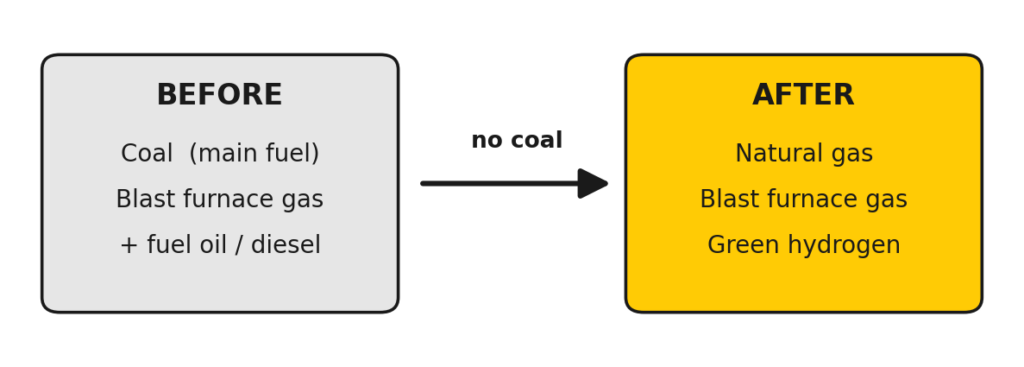
Figure 1. Unit 2 moves from a coal-led fuel mix to natural gas, blast furnace gas and green hydrogen.
Keeping the steelworks gas in the mix matters. Blast furnace gas is a low-energy fuel given off when iron ore is smelted in a steel mill’s blast furnaces; it would otherwise be largely wasted. Burning it to generate electricity turns a by-product into useful power — a practical example of industrial symbiosis between a power station and the steelworks next door.
Hydrogen is the fuel set to grow over time. The converted boiler can already burn all the hydrogen that a 100 MW production plant would make, and the study showed it could handle much more as EDP scales up its on-site hydrogen supply in the years ahead.
What the engineers found
To check that the idea would actually work, the team modelled the boiler across eight operating scenarios — from a low “technical minimum” of around 38% of full power up to 100% load — each with a different recipe of gas, hydrogen and steelworks gas. The good news: across all of them the boiler can still deliver steam at its design temperature of about 541°C, and overall efficiency stays within its usual range of roughly 84–86%.
The catch is heat. Hydrogen burns hotter than natural gas, and that changes how heat moves through the boiler. Some of the steel surfaces that capture that heat — in particular a component called the primary superheater — would run too hot for the materials they were originally built from. The headline engineering conclusion is that this part must be fully replaced with tougher, higher-temperature alloys, while most other surfaces need only small, targeted adjustments or none at all.
Converting to hydrogen is not a simple fuel swap — it is a redesign of the whole combustion and boiler system.
Cleaner air
The environmental payoff is significant. Because natural gas contains no sulphur, the plant’s sulphur dioxide emissions all but disappear, and fine particulate emissions fall to near zero. The biggest prize is carbon dioxide: depending on how much steelworks gas is in the mix, combustion emissions fall by roughly a fifth to as much as 70% compared with the coal-fired baseline.
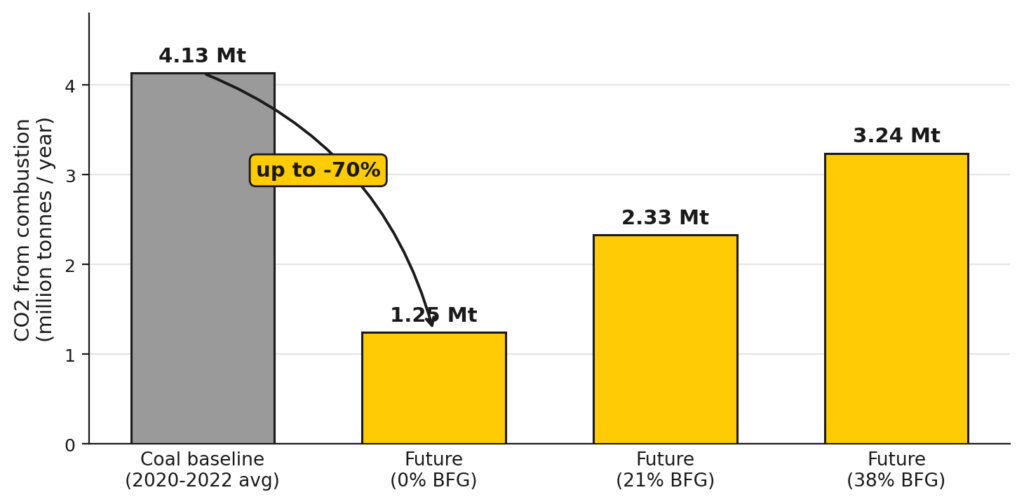
Figure 2. Annual CO₂ from combustion, coal baseline versus future operating scenarios (BFG = blast furnace gas; Mt = million tonnes).
Burners built for hydrogen
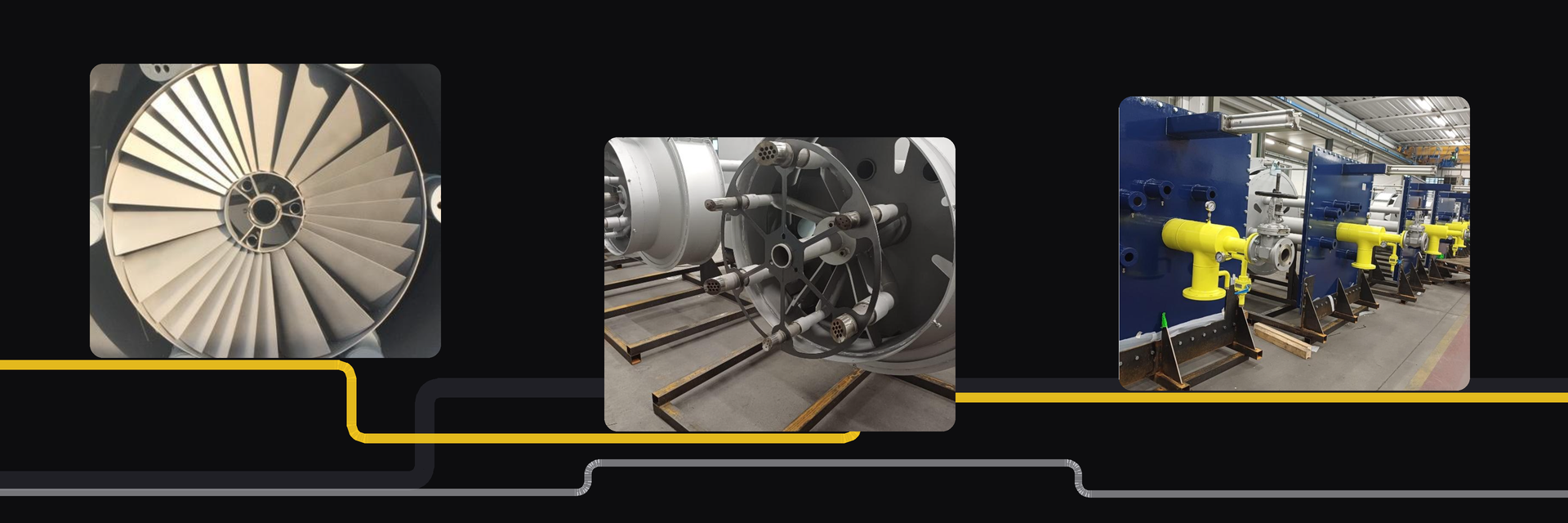
At the heart of the conversion is a new set of burners. The old system — dozens of coal burners plus separate gas equipment — has been replaced with 30 modern “low-NOx” burners able to fire natural gas and hydrogen together while keeping nitrogen-oxide pollution low. Each was shaped using computer simulations of how air, fuel and flame behave inside the furnace, and built from heavy-duty heat-resistant materials to cope with hydrogen’s hotter flame over a long working life.
Because the burner design builds on a commercially proven gas-burner platform, the team rates the hydrogen-ready version at a high technology-readiness level — close to fully commercial — for the natural-gas-and-hydrogen blends studied here. Firing on pure hydrogen one day would need further redesign and testing, but the path is now mapped out.
Why it matters beyond Aboño
Aboño is one of around 27 power plants across Europe that burn steelworks gas, and many other coal stations are weighing up their future. By documenting the whole journey — the heat modelling, the materials checks, the burner design and the lessons learned — this work creates a repeatable blueprint that other operators can follow. For plants facing a choice between expensive retirement and reinvention, co-firing natural gas, green hydrogen and recovered industrial gases offers a credible third way to cut emissions while keeping the lights on.
This work was carried out under Work Package 4 (Industrial Use of Hydrogen) and co-funded by the Hy2Market project.