

Hy2Market Report Summary: Hydrogen and Oxygen in Energy-Intensive Industry
The following summary was written by Prozess Optimal with the support of the Hy2Market consortium partners K1-MET, Power Evolution SRL, SNAM S.P.A. and WIVA P&G. The summary focuses on the uses of hydrogen as a feedstock. More specifically, the report provides a comprehensive analysis of hydrogen (H₂) and oxygen (O₂) applications in energy-intensive industries and geo-methanation, developed within the framework of the Hy2Market project. This report provides practical insights for industrial stakeholders seeking to decarbonise their operations, and while the report is confidential, a summary of the report findings can be found below.
As Europe accelerates its transition toward carbon neutrality by 2050, hydrogen and oxygen produced through water electrolysis are emerging as critical enablers for decarbonizing heavy industry. Across the hardest-to-abate sectors—steel, cement, ceramics, glass, chemicals, heat generation, and transport—demonstration projects are advancing rapidly, proving that these technologies can deliver deep emission reductions at industrial scale. At the same time, geo-methanation offers an innovative approach to seasonal energy storage by converting hydrogen and CO₂ into methane within underground geological formations. Within the Hy2Market project, these applications are being analysed and connected to create integrated hydrogen value chains across Europe.
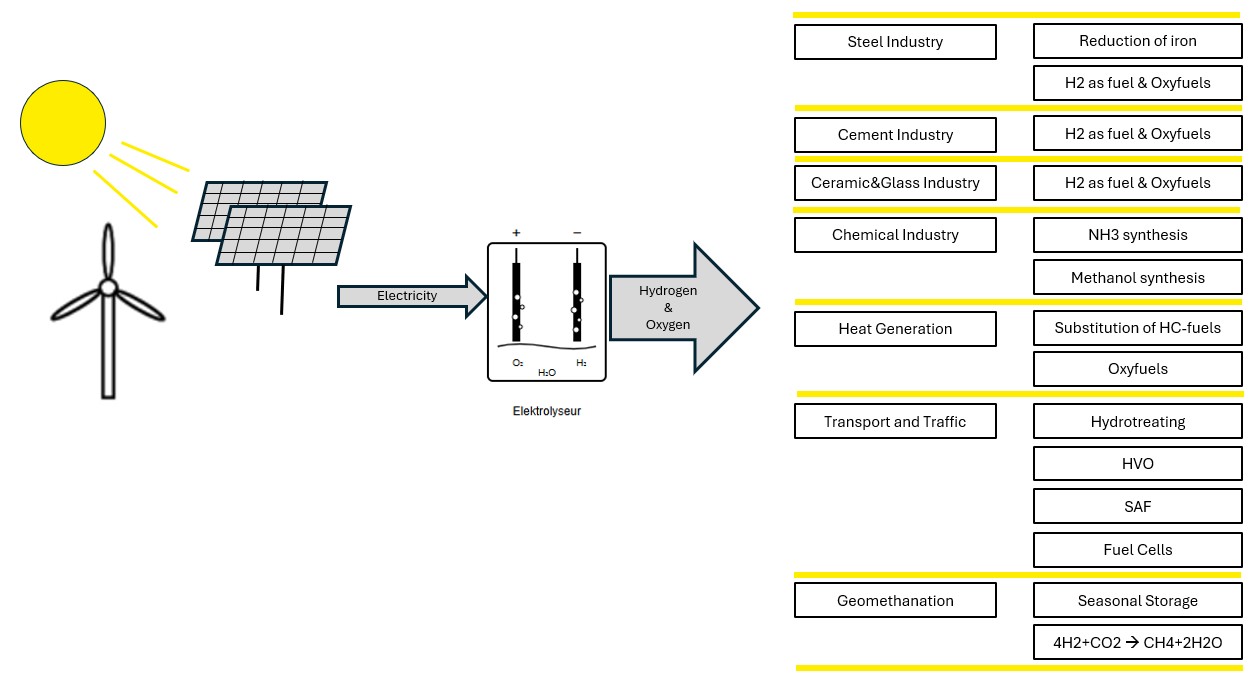
Figure 1 – Overview of H₂ and O₂ production and industrial applications
Image Source: © Prozess Optimal
•
The steel industry, responsible for approximately 7–9% of global CO₂ emissions, stands at the forefront of hydrogen-driven transformation. Conventional blast furnace steelmaking generates 1.8–2.0 tonnes of CO₂ per tonne of steel. Hydrogen-based direct reduction of iron (H2-DRI) combined with electric arc furnaces can cut these emissions by over 95%, producing water vapour instead of CO₂ as a by-product. Major European projects are advancing this technology at industrial scale: HYBRIT in Sweden has already delivered the world’s first fossil-free steel, H2 Green Steel (Stegra) is constructing Europe’s largest greenfield H2-DRI plant with a 700–800 MW electrolyzer., and Salzgitter SALCOS in Germany is deploying flexible Energiron ZR® technology that can operate with any hydrogen/natural gas mixture. Beyond conventional DRI, Hydrogen Plasma Smelting Reduction (HPSR) is an emerging technology that uses high-temperature plasma to reduce iron ore fines directly—eliminating costly pelletizing—with CO₂ reductions of 98.2% compared to conventional blast furnace–basic oxygen furnace (BF-BOF) route, as calculations from the Hy2Market partner K1-MET GmbH have been shown. The Austrian Hy4Smelt demonstration plant combines HYFOR fluidized bed reduction with electric smelting, enabling direct processing of low-grade iron ores.
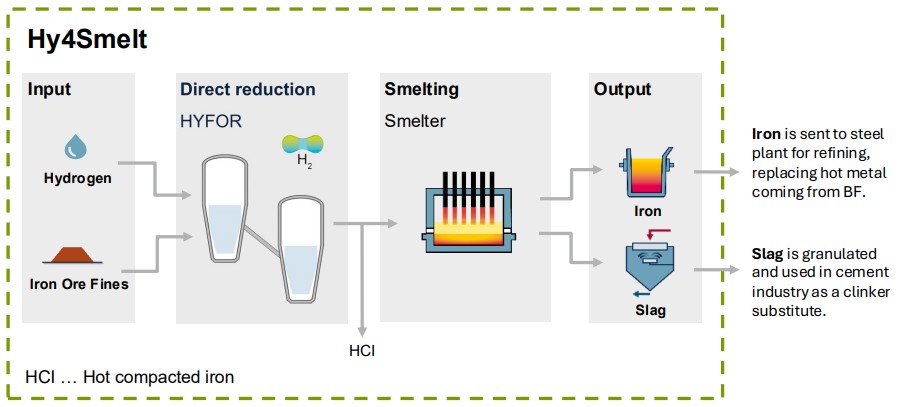
Block diagram Hy4Smelt
Image Source: © Hy4Smelt project
•
In cement production, the challenge is unique: approximately 60–65% of emissions come from the calcination of limestone rather than fuel combustion, making carbon capture essential for deep decarbonization. Oxyfuel combustion technology, which replaces air with pure oxygen, produces flue gas with 70–85% CO₂ concentration, dramatically simplifying capture. Holcim’s Carbon2Business project at Lägerdorf targets capture of 1.2 million tonnes of CO₂ annually, while the CI4C consortium at Mergelstetten is constructing the first “pure oxyfuel” clinker line ever built. Heidelberg Materials successfully demonstrated at Ribblesdale that a fuel mix containing 39% hydrogen maintains clinker quality. In the ceramic and glass sectors, hydrogen adoption has advanced further than many anticipated. Iris Ceramica Group in Italy produced the world’s first ceramic slab using green hydrogen in July 2024, and Steklarna Hrastnik in Slovenia achieved commercial production of 150,000 glass bottles using over 60% hydrogen fuel in December 2023, while SACMI now markets 50% hydrogen blend-capable production kilns commercially.
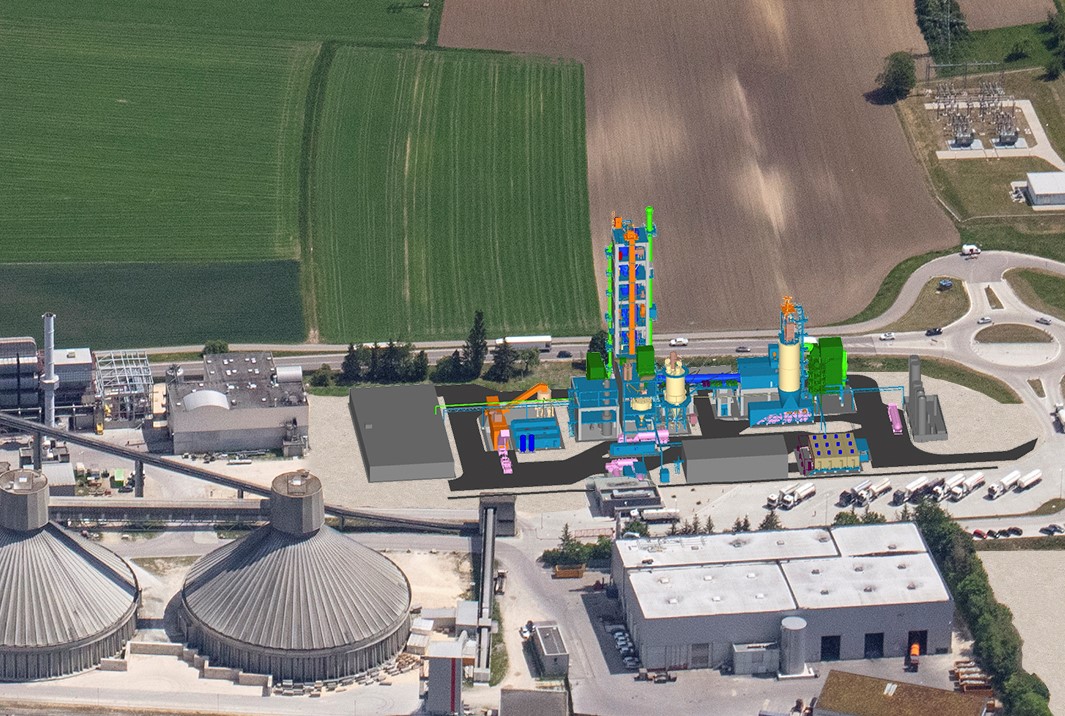
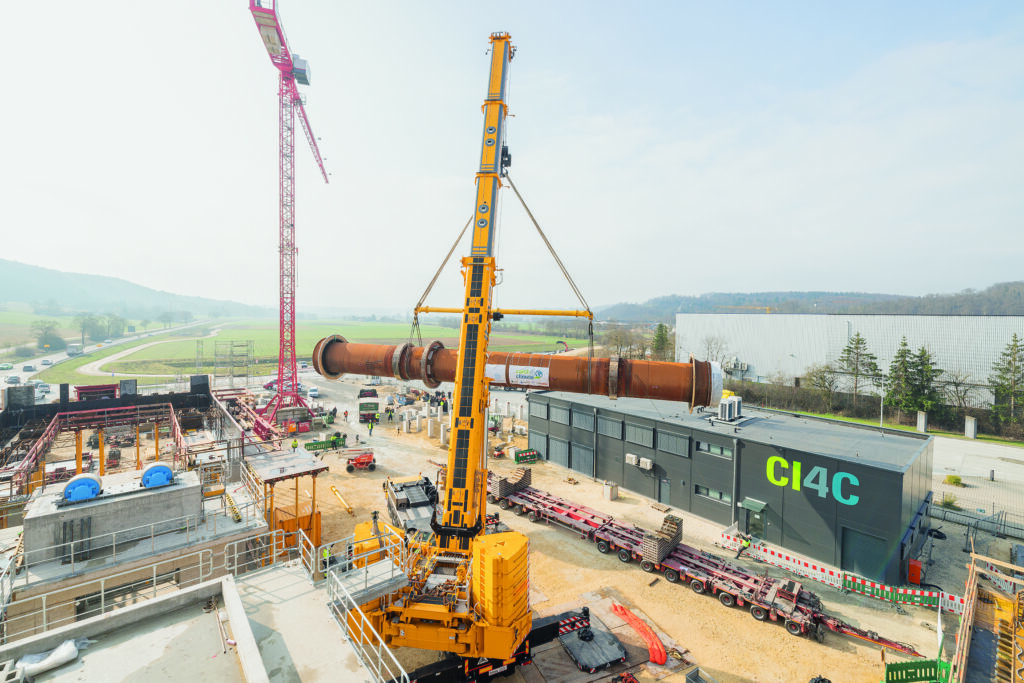
CI4C/catch4climate: Construction of the first pure oxyfuel clinker line at Mergelstetten
Image Sources: © catch4climate & Mergelstetten plant
•
The chemical industry, the world’s largest hydrogen consumer at approximately 70 million tonnes annually, offers immediate decarbonization potential through feedstock substitution. Ammonia synthesis via the Haber-Bosch process consumes 178 kg of hydrogen per tonne of product and accounts for 55% of global hydrogen demand. The NEOM Green Hydrogen project, with 4 GW of renewable capacity, will produce 1.2 million tonnes of green ammonia annually. In methanol synthesis, European Energy’s Kassø e-methanol plant in Denmark, inaugurated in May 2025, is theworld’s first large-scale commercial e-methanol facility, producing 42,000 tonnes annually for customers including Maersk, LEGO, and Novo Nordisk.
•
Replacing natural gas with hydrogen for industrial heat generation requires significant adaptations to burner design and combustion control, as the combustion and flame properties are different. While these different characteristics enable faster heating, they also increase thermal NOx formation significantly. Mitigation strategies include lean burn combustion, staged combustion, flue gas recirculation, and flameless combustion technologies. Leading manufacturers such as Tenova, Five or SMS group have developed 100% hydrogen-ready burner systems. One example of this is Tenova’s hydrogen-ready burners already deployed at TenarisDalmine through the Horizon Europe-funded HyTecHeat project. The HAAS (Hydrogen As A Service) initiative by Snam further supports adoption by leasing containerized electrolysis systems to industrial end users, reducing investment barriers and enabling companies to test hydrogen combustion without major capital expenditure.
•
An often overlooked but significant opportunity lies in oxygen valorisation. Water electrolysis produces 8 kg of oxygen for every 1 kg of hydrogen, yet most projects currently vent this valuable by-product to the atmosphere. Industries requiring high-purity oxygen—steel (70–227 kg O₂/t), cement (177–249 kg O₂/t clinker), glass (430 kg O₂/t), and ceramics (182–193 kg O₂/t)—represent natural partners for integrated co-production. Capturing this value could reduce effective hydrogen costs by 10–20%, accelerating the path to economic viability.
•
Another promising avenue is geo-methanation—the microbial conversion of hydrogen and CO₂ into synthetic methane within underground geological formations. Field trials by RAG Austria AG at the Lehen reservoir demonstrated hydrogen recovery rates of approximately 84% and confirmed in-situ methane production. Laboratory mesocosm experiments further validated process stability, while microbial community analysis confirmed the dominance of methanogenic archaea. Europe’s depleted hydrocarbon reservoirs offer an estimated storage potential of 89 billion m³, positioning geo-methanation as a promising solution for seasonal energy storage that leverages existing natural gas infrastructure.
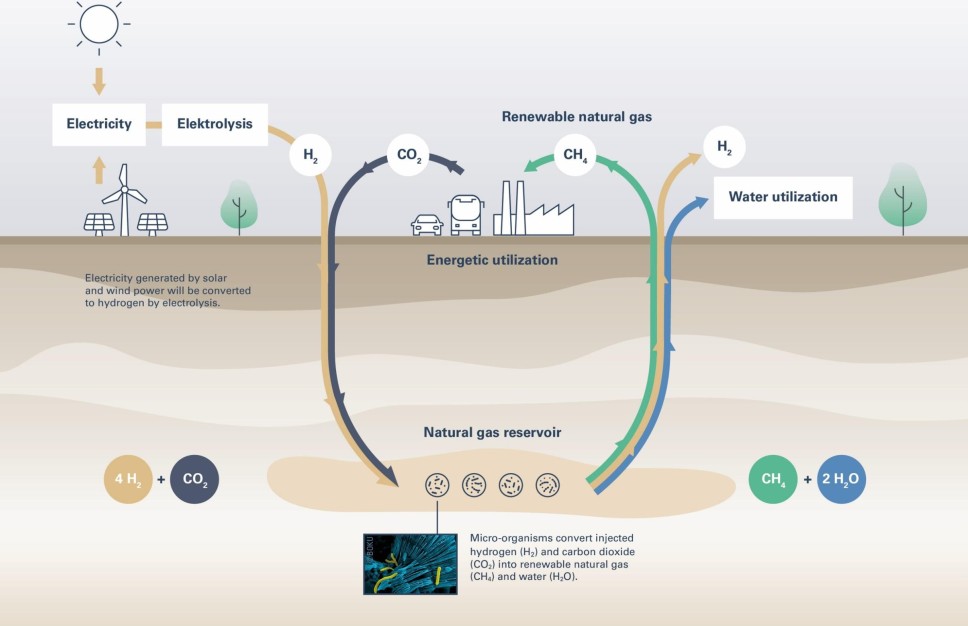
Geo-methanation: Underground conversion of H₂ and CO₂ into renewable natural gas
Image Source: © WIVA P&G & RAG Austria AG
While technological readiness has advanced substantially across all sectors, economic viability remains the decisive barrier to scale. The path forward requires continued cost reductions in renewable electricity and electrolyzer manufacturing, stable policy frameworks including carbon contracts for difference, and strategic development of hydrogen transport and storage infrastructure.
•
Hy2Market continues to contribute to this transformation by connecting hydrogen production with industrial demand and developing integrated solutions across Europe’s hydrogen valleys.